Date: February 21st, 2011
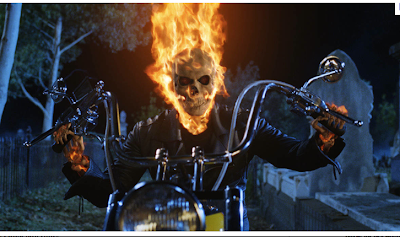
A friend of mine calls any situation where the space between your ears stops working a “helmet fire.” I love that expression; it’s so descriptive of the times when we just stop thinking about the exterior world or “reality” and burn up in a mental paroxysm of self-fueled mental combustion. Every sport has it’s “helmet fire” situations; pro athletes choke, skiers crash getting off the chairlift, novice climbers turn into jello and cling to the rock like terrified children, good leaders suddenly can’t do a 5.8 move on a jug. Helmet fires, each and every one.
So how do you put out a helmet fire? The short path is to stick your head in a creek, but this is unfortunately hard to do in most situations. Here are a few suggestions:
-Look in the mirror after a helmet fire. Nobody wants to admit that they had a mental seizure, it takes real guts to admit that and then try to figure out what happened. Without self-analysis nothing will change. Change is uncomfortable; admitting a malfunction to yourself may mess with your perception of how good you are at something, and the mind is incredible at protecting the ego. Watch any kid throw a temper tantrum when they can’t figure something out. Damn mirrors.
-Break down the components of the malfunction. What was really at stake? Death? Injury? Pride? Self-belief? Personal perception? Often there’s not as much at stake as the person believes, or less on the outside and more on the inside. “I can’t do X because…” Bullshit. If you’re soloing really high then maybe you can use that excuse, but most of the time there’s just not much there in terms of heavy consequences. And if there is then you shouldn’t be there with a helmet fire, back it down.
-Search for the same helmet fire situation, and enter it willingly with full awareness (if it’s not likely to be fatal). I used to be afraid of large holes while kayaking; my friend Jim G. decided he loved them. I’m still not a fan of getting pounded, but I try to stuff myself into as many nasty holes as I can like Jimmy does.. It has helped. Same with every sport I do; thin ice used to give me instant helmet fires, so I climbed a lot of it on TR. Now it just annoys me as it’s slow but reasonably secure.
-Create operating room in your head. Hang on gear, pull into an eddy, glide into still air, do something to stop the mental load increasing, if only for a moment. This is a sort of “reset” button.
-Focus on the fact that right then, right there, you’re “OK.” Most of the time you are; I’ve watched fully grown men cower on scree slopes. I stop, sit down with them, and eventually they get bored of cowering and stand up to move. Often they have to sit down again, but each time they stand they get stronger mentally, and the helmet fire goes down. Small steps forward from a position of, “OK now.”
-Enjoy your head. As I get older and see my friends age I can see the best athletes among us getting more comfortable with who they are and how their heads works, and often their performance gets better even as their bodies age. The head is always the most important thing in any meaningful environment, always. Might as well train it and enjoy it.
“There are no limits. There are plateaus, and you must not stay there; you must go beyond them. If it kills you, it kills you.”
-Bruce Lee
Posted in: Blog
Date: February 21st, 2011
WG Note–I wrote this a while back, feel it again now, so it’s going up:
The last week has been high-speed. Articles, coaching, home, life, kid, the backlog of travel-delayed work etc, there just wasn’t a lot of time to get outside and huck a lung. The first few days of low activity were voluntary, I was just plain worn out after Helmcken and the Knucklebasher comp, and then life started conspiring against getting out for an aerobic burn. I tried once, but felt like my feet were lead… I’m old enough to know when I’m over-trained and just over-done; I needed to rest so I could focus and give energy to what was important, especially coaching and home life, but without an aerobic burn junk accumulates in my body and mind like creosote in a chimney when the fire isn’t burning hot enough.
Yesterday I spent pretty much all day in Ikea with my kid; she loves it there, but I’m pretty sure that place is some sort of cynical Swedish mind-fuck program with researchers lurking in the ceiling to see what men will do when pushed too far in a frilly environment. Finally drove back to town, it was later than it should have been, and I was getting more ornery by the minute. As darkness loomed I threw my skis in the car, downed a little silver and blue can, and headed for the Canmore nordic centre.
iPod on, not something I normally do, but I wanted full zone-out. Old Sisters of Mercy, Kid Rock, Minor Threat, Rage, and rage I did. For 90 minutes I was unstoppable. When the playlist ended I realized my pulse rate was insanely high, but I’d held it that high for well over an hour without even thinking about. On some of the steep hills at the Nordic Centre my main goal is often to just keep moving; last night I stabbed the snow with the poles hard enough to hear the carbon flex, and as Henry Rollins sung, “Inhale power, exhale force,” I exhaled plastic Ikea junk out of my pores and inhaled clean oxygen. Inhale another ten feet of hill, exhale frustration with people leaving carts in the middle of the goddamn aisle so they can look at Bjornphalluses. Inhale motion, exhale stagnation.
As twilight faded to black I skied with full abandon back down the turns to my car, on the edge of crashing but looking forward to the icy cold of the snow on my face if I did. It would have been prudent to slow down; I poled as hard as I could anytime that looked to be happening. A friend of mine talks about becoming an animal when he’s outside. He’s right.
I share this with you as a reminder that there is not much in life that can’t be made better by going outside and breathing hard. Sometimes we all need a good chimney fire.
Posted in: Blog
Date: February 14th, 2011
On Saturday EJ and I returned from Helmcken Falls. Tim Emmett had to head out a day early due to slideshow obligations in the UK, but we all had at the climbing there for another few days. The stoke level is high!
Tim wrapped in from the lip of the falls to see if the “ice” on the headwall was climbable. This year it isn’t, mostly snow, but I’ve seen photos from years where it is. EJ and I bolted sideways for another 30 feet on the headwall before the spray pattern changed, and we had to bail before turning into a long-term feature on the wall. Tim redpointed pitch 4 and said, “I spent $1000 and four days of my life to change my tickets for this trip. That pitch was totally worth it!,” And, “This is how BASE jumping used to make me feel.” EJ worked the first pitch and said, “This is the best climbing ever. Dude.”
I can talk about how good the climbing is forever, but their comments sum it up for me. The ice climbing in the Helmcken Falls cave is just over the top brilliantly good. On the last day EJ and I opened two short “practice” routes on the spray, “Dora the Explorer” and “Sabre.” One is a rampy 3+ sorta thing, the other a Haffner-sized WI4 fun ride that goes directly up to the same anchor. I only give grades to encourage those who don’t climb M10 or harder to visit the cave; there is opportunity for everyone who can handle the high-risk environment. Both the “easy” routes would make any ice climber smile for the day.
I’m now firmly convinced that grades on ice in general and at the Helmcken cave specifically are irrelevant. If you want to climb WIxx it’s there; but a few pillars might grow that would allow no-hands rests, and it would be WIx… Horizontal ice climbing is about like horizontal drytooling, but with more technical feet, movement, and of course it’s ice so you either have to swing or use hooks in the ice like any other route. Placements rip, it takes all the skills of normal ice climbing and the power of hard drytooling. The biggest thing I learned on the last trip is that at the “difficulty” end of the ice climbing spectrum is a return to the novice days of ice climbing: it’s about the experience, the place, the movement. I know our route is way, way harder than anything I’ve ever climbed on ice, but harder routes are of course possible, and next year Spray On could be littered with pillars that would make it easier, but no less fun. And a harder route that didn’t follow cool features just wouldn’t really be any cooler… Grades are useful for rock, but for ice climbing beyond about grade 4 they are somewhere between annoying and irrelevant. Take a look at the photo, climb it or don’t. Like surfing, kayaking, skiing, or skateboarding, it’s all about the moves, the scene, your friends, life, fun, stuff that grades just don’t measure. So, I’m done rating any ice climb after grade 4 with numbers. Words, sure–thin, hard, steep, bad gear, good gear, you can do it, you should maybe do something less serious, but not numbers. Helmcken just blew the building up that contained all the ice grading ego BS; it’s harder than all of us, ha ha!
On our route (Spray On) you climb the first pitch, pull the rope through, your belayer walks out across the floor of the cave, climb the second pitch’s horizontal roof, your belayer walks out across the floor of the cave again, drop the rope, repeat. Each pitch ends in a place where you can get a solid no-hands rest; the 3d climbing and ice features require relatively short pitches for rope drag and safety. After four pitches the rope is 30+ horizontal meters out from where you started, but you’re only 35 meters off the deck! It’s madness. Some pitches could be linked. With three or four ropes, a whack of slings and some jiggery you could maybe do the whole thing in one massive pitch, but would it be more or less fun? Harder? Better just climb!
There are hundreds of routes to do down there. It was raining and plus 5 when we left so there’s likely not ice much left for this year, but come next year we’ll be there. Other people are going to visit the place too I hope, so I’d like to offer a short set of observations we’ve found useful:
-Don’t leave quickdraws or any gear on the wall, or permanent fixed lines on the route or raps on the way in (leave ’em in there for your trip, just not when you leave). This stuff is invisible from the viewpoint or anywhere else, but a few people do walk in there in the summer. With added traffic low-visibility should be a focus. Downclimb pitches so there’s nothing on the anchors, etc… This adds work, but is important I think. I would regard leaving gear in there for the summer as a serious failing on the part of any climber. What we’re doing is the same as climbing anywhere in a park so no legal issues, just using the best visual style and lowest impact on other users. Although the main complaint so far has been that we’re near-impossible to see from the rim where we’re climbing, ha ha!
-The whole place is hazardous. You can get complacent about standing under many-ton icicles, but someone is going to get hurt or killed down there, and evacuation will be an adventure. I’m in full “alpine” mode down there; what’s happening with the temperature, where is the spray forming new ice, can the cone break off (generally it breaks off to the OUTSIDE), and if so will the car-sized blocks get to us, etc. It takes a few days to start to understand the place at all. Even the five-minute walk to the back of cave (no lie–that’s how long it takes to get there from the trees!) could be lethal if you slid down the ice and into a crevasse. This isn’t Haffner, it’s more like climbing big alpine faces in terms of environmental hazard.
-If the temperature in there goes much above freezing for even a few hours you need to walk out the long way or risk getting smushed. The ice doesn’t have the same insulation characteristics as fat water ice and will fall off the roof sooner. Beware.
-Spray ice is weaker than full-water ice, and breaks in odd ways. It only takes a whack from a tool to rip a 40-foot dagger, and that dagger can start other daggers ripping. Rope management is critical; never have your rope running under a big ice feature, even one that seems solid. I’ve broken out desk-sized blocks I was sure were solid… Putting up new routes is a battle of epic, epic proportions due to not only the angle but also the ice cleaning etc. Some days in the horizontal roof we would only gain about 20 feet for a day’s effort. It’s worth it, just work.
-The Helmcken Falls Lodge runs a winter special for $120 that includes a room with two beds, two breakfasts, two good dinners, and lots of great hospitality. That’s only $60/person for a warm, nice room only 15 minutes from the falls. The owners are good people too, and have really helped us out over the last two seasons, say hello and treat them well ’cause if you go there once you’re going to be going back a fair amount I bet…
We’re done for the season, but game on for next year. A metal detector will be required to find our old bolts (even some on the upper pitch were getting covered with a light frosting when we left). We’ll put up some topos and tricks for finding the base of Spray On (Dora and Sabre should be easy to find every year, far side of the cave)
Posted in: Blog
Date: February 10th, 2011
Helmcken Rematch: Tim walked the 1.5 hours into the top, wrapped in to see if the white stuff was ice, it wasn’t, back out with a monster pack, good effort Tim! EJ and I re-rigged the first five pitches, which have not gotten any easier but still have good ice to climb. Tomorrow we add to the route, likely another amazing pitch or two before the turns to frost. Do not want to drytool higher, plus there’s the small matter of actually climbing all the pitches! Might start another line or two if we have time, this place is just awesome!
It’s a hell of a lot of effort to just get back to our high point. Normally I’d take a rest day tomorrow, but game on! When the ice is good you gotta go at it.
Posted in: Blog
Date: February 8th, 2011
If you have a Plice that you can tilt the following workout is pretty darn fun. All laps start with the heads of your tools 48 inches off the ground or less, butt, one pullup with a lock at the top. This is roughly the same amount of effort required to climb the five pitches we’ve done so far at Helmcken. And we’re heading back today to try and get higher…
Helmcken Falls Workout
Approach: 50 squats with a 1/4 bodyweight PACK, 50 push press w/ 1/4 bodyweight, deadlift 1/2 bodyweight 50 times. Now yer warm, loose and have a slight pump in your forearms.
Chop wood for five minutes, wheelbarrow and stack. (substitute row 500M if you don’t have wood to chop. No rower, ground to rack clean the deadlift bar 20 times).
Pitch One:
-6x 30 degree Plice, full solid lockoffs every reach for first three laps.
-20 Knees to Elbows.
Chop Wood for five minutes.
Pitch Two:
-2x 45 Plice, two figure 4s per side per up lap.
-10 KE
Chop wood for five minutes
Pitch Three (continuous)
-1 x45 Plice all campus
-1×45 Plice all Figure Fours
-1×45 Plice.
-20 Front levers to best of ability, done straight through.
Chop wood Ten minutes
Pitch 4
6×30 plice, campus first lap.
20 KE
Chop wood ten minutes.
Pitch 5
4X30 Plice with a 20 Lb Pack.
20 negative Front Levers.
Hike Out:
Finish chopping wood for 15 minutes.
That’ll be all.
Posted in: Blog